
You are standing in front of your electrical panel or generator transfer switch, and instead of reassuring silence, you hear a constant, annoying humming or a loud, aggressive buzzing sound.
If you are wondering, “Why is my automatic transfer switch buzzing?” you are not alone. Electrical noises can be unsettling, often leading homeowners and facility managers to fear an imminent short circuit or electrical fire.
The good news? Most buzzing sounds (often referred to as AC chatter) are common and fixable. The bad news? If left ignored, a loudly humming transfer switch can eventually lead to mechanical failure, contact welding, or a complete loss of backup power.
In this troubleshooting guide, we will diagnose exactly what that noise means, explore the top 3 causes of a buzzing transfer switch, and show you how to safely quiet it down—or when it is time to upgrade to a silent model.
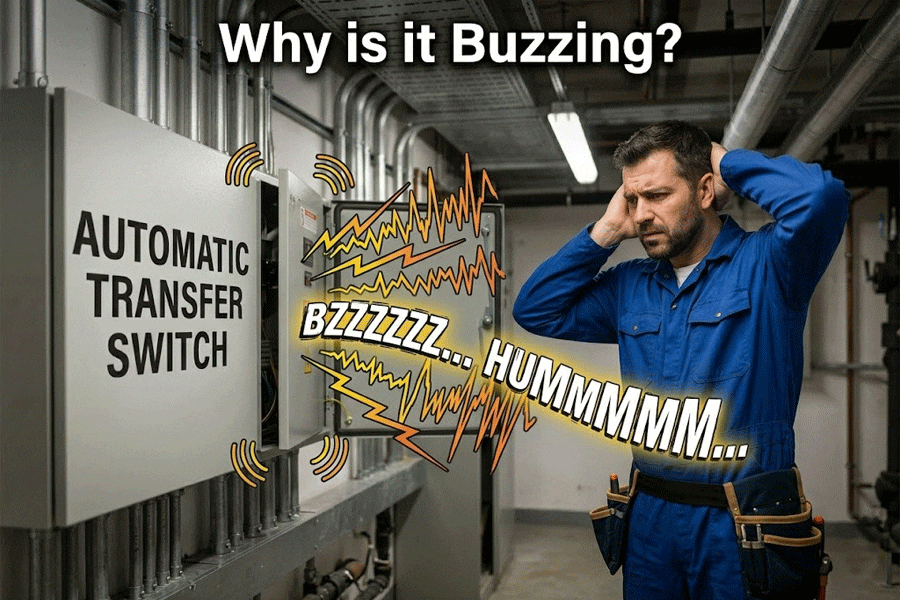
Is a Buzzing Transfer Switch Dangerous? (The Sound Test)
Before you grab a screwdriver, stop and listen closely to the type of noise your ATS is making. The sound itself is the best diagnostic tool.
| Type of Sound | What It Means | Danger Level |
|---|---|---|
| Low, Steady Hum | Normal operation for older contactor-type switches. The electromagnetic coil is energized and holding the contacts closed. | Low (Safe) |
| Loud Buzz or Rattle | AC Chatter. Dirt on the magnetic core, low voltage, or loose mechanical components vibrating at 50/60Hz. | Medium (Needs Attention) |
| Crackling or Hissing | Arcing. Electricity is jumping across a gap. Contacts are severely worn or failing. | 🔴 HIGH DANGER (Turn Off Immediately!) |
Warning: If you hear crackling, see sparks, or smell burning plastic, turn off the main breaker and the generator immediately and call a licensed electrician.
Top 3 Causes of ATS Buzzing and Humming Noises
If your transfer switch is making a loud buzzing or rattling sound (but no crackling), it is almost certainly suffering from one of these three common issues:
Cause 1: Dirt, Dust, or Rust on the Magnetic Core (AC Chatter)
Traditional automatic transfer switches rely on an electromagnetic coil to pull two halves of a metal core together to close the circuit. These two metal surfaces must mate perfectly flat.
If even a tiny speck of dust, rust, or debris gets trapped between the mating surfaces, the magnet cannot close tightly. Because AC power alternates 50 or 60 times a second, the loose metal halves slap against each other rapidly. This high-frequency vibration is what causes that aggressive electrical buzzing or AC chatter.
Cause 2: Low Voltage (Brownouts) Reaching the Coil
The electromagnetic coil needs a specific voltage to generate enough magnetic pull to hold the switch closed tightly. If your utility grid or generator is experiencing a voltage drop (brownout), the coil becomes weak. It struggles to hold the heavy contacts together, causing them to vibrate and hum loudly.
Cause 3: Loose Electrical Connections or Mechanical Vibrations
Generators create massive vibrations. Over time, these vibrations can travel through the conduit and loosen the terminal screws inside your transfer switch enclosure. A loose wire connection creates high resistance, heat, and a noticeable buzzing sound as the current struggles to pass through.
Step-by-Step: How to Troubleshoot and Fix a Noisy ATS
If your transfer switch is buzzing loudly, here is how you can safely investigate and potentially fix the issue:
- Safety First (Power Down): Never open a live transfer switch panel. Turn off the main utility breaker AND the main breaker on your backup generator. Use a voltage tester to confirm the box is completely dead.
- Tighten All Connections: Using an insulated screwdriver, systematically check and tighten every terminal lug and mounting screw inside the enclosure. This simple step fixes a surprising number of buzzing issues.
- Clean the Enclosure: If the switch is old and dusty, use a can of compressed air to carefully blow out dust and debris from around the moving mechanical parts and the contactor coil area.
- Test the Voltage: Once closed up, restore power and use a multimeter to ensure the incoming voltage is stable and matches the ATS coil requirements.
Important Note: Never spray liquid lubricants like WD-40 onto electrical contacts or the magnetic core. This will attract more dust and create a severe fire hazard.
When Cleaning Doesn’t Work: The Hidden Costs of Old Switches
You tightened the screws, blew out the dust, and checked the voltage—but the transfer switch is still humming loudly enough to keep you awake.
Unfortunately, if the magnetic core has developed permanent rust, or the internal copper contacts are severely pitted from years of arcing, the buzzing cannot be repaired. Continuing to use a vibrating switch will eventually cause the coil to burn out or the contacts to weld together permanently. It is time for a replacement.
Upgrade to a 100% Silent, DIN-Rail Automatic Transfer Switch
Why replace your noisy, outdated contactor-type transfer switch with the exact same bulky technology?
Modern electrical engineering has solved the buzzing problem entirely. The new generation of PC-Class Automatic Transfer Switches (like the SATS Series) utilizes an advanced mechanical latching mechanism.
What does this mean for you?
- Absolute Silence: The motor only draws power for a fraction of a second (≤0.05s) during the actual transfer. Once switched, it locks mechanically and consumes ZERO steady-state power. No coil means no hum, no buzz, and no heat.
- Compact DIN-Rail Design: Ditch the massive metal boxes. The SATS series fits perfectly onto a standard 35mm DIN rail, making it incredibly easy to install inside your existing distribution panel or solar PV combiner box.
- Premium Silver Alloy Contacts: Say goodbye to pitted, welded contacts. Premium silver alloy ensures a long, reliable, and spark-free lifespan.
Tired of listening to your electrical panel hum? Upgrade to a modern, silent, and highly reliable backup power solution. Contact our B2B sales team today for bulk pricing on our CE and ISO-certified hum-free DIN-rail ATS units.
Frequently Asked Questions (FAQ)
Q: Is it normal for an older transfer switch to hum slightly? A: Yes, a very low, steady hum is normal for older switches that use a continuously energized electromagnetic coil. However, a loud buzz or rattle indicates a problem.
Q: Can a buzzing transfer switch cause a fire? A: A loud buzz caused by AC chatter means the switch is generating excess heat. Over time, this heat can melt the plastic housing, burn out the coil, or cause the contacts to weld, which poses a significant fire hazard.
Q: How do you clean dirty transfer switch contacts to stop buzzing? A: Cleaning should only be done by a professional. It involves completely de-energizing the unit and using specialized contact cleaner spray or very fine abrasive pads. However, if the contacts are deeply pitted, the switch must be replaced.