Every year, millions of dollars in industrial equipment and solar inverters are wiped out in an instant. The culprit? Transient overvoltages.
Whether it is a sudden lightning strike damaging a rooftop solar array or an internal power surge from heavy machinery shutting down, an unprotected electrical system is a ticking time bomb. For electrical engineers, EPC contractors, and procurement managers, ensuring system safety means installing the right Surge Protective Device (SPD).
However, sourcing and selecting the correct SPD is rarely a one-size-fits-all process. A standard AC surge protector cannot survive in a high-voltage DC solar PV system, and choosing the wrong specifications can lead to catastrophic electrical fires and costly downtime.
If you are designing a PV combiner box, upgrading an industrial control panel, or looking to source reliable 35mm DIN-rail protection components, you are in the right place. In this comprehensive B2B guide, we will break down the core differences between AC and DC SPDs, explain crucial technical parameters like Uc, In, and Imax, and show you exactly how to build a bulletproof protection system.
What is a Surge Protective Device (SPD) and Why is it Essential?
At its core, a Surge Protective Device (SPD) is a specialized component designed to protect electrical systems and sensitive equipment from voltage spikes, known as transient overvoltages.
To understand how an SPD works, think of it as a pressure relief valve in a water pipe. Under normal conditions, the water (electric current) flows smoothly to its destination. However, if a sudden surge in pressure occurs, the relief valve instantly opens to divert the excess water, preventing the pipes from bursting. Similarly, an SPD utilizes internal components—most commonly a Metal Oxide Varistor (MOV)—that maintain high resistance during normal voltage. When a high-voltage spike hits the system, the MOV’s resistance drops in nanoseconds, clamping the voltage to a safe level and safely discharging the excess current into the ground.
The 80/20 Rule of Power Surges: Busting the Lightning Myth
When most people hear the word “surge,” they immediately think of thunderstorms and direct lightning strikes. This is a dangerous misconception that leaves countless control panels and distribution boards vulnerable.
In reality, the industry operates on an 80/20 rule:
- External Surges (20%): These are caused by direct or indirect lightning strikes and grid-level switching events. While less frequent, they carry massive amounts of energy and can cause instant, catastrophic failure to solar arrays and main distribution panels.
- Internal Surges (80%): The vast majority of transient overvoltages are generated inside your own facility. Every time a large inductive load is switched on or off—such as the starting of large industrial motors, transformer grid switching, or the frequent cycling of massive inverters—it sends micro-surges back into the electrical network.
Over time, these daily, unnoticed internal surges degrade the insulation of your wiring and slowly destroy sensitive electronic boards inside your energy meters, PLCs, and power supplies.
Simply put, an SPD is not just “weather insurance” for a rainy day; it is an essential daily shield that extends the lifespan of your entire low-voltage electrical infrastructure.
The Core Difference: AC vs. DC Surge Protectors Explained
One of the most dangerous and common mistakes an installer or procurement manager can make is assuming that all surge protectors are universal. While both AC (Alternating Current) and DC (Direct Current) SPDs serve the same fundamental purpose—diverting excess transient voltage—their internal engineering is drastically different.
Using a standard AC surge protector in a high-voltage DC solar system is not just a technical error; it is a severe fire hazard. Here is the science behind why you must choose application-specific protection:
AC Surge Protectors: Built for the Grid
In a standard AC electrical distribution system, the voltage is cyclical. It naturally drops to zero volts 100 or 120 times per second (depending on your 50Hz or 60Hz grid). This crucial “zero-crossing” point makes it relatively easy for the SPD to automatically extinguish any electrical arc that forms internally after a surge is safely diverted to the ground.
AC SPDs are typically rated for continuous voltages like 275V, 320V, or 385V. They are the standard, reliable choice for protecting industrial control panels, commercial distribution boards, and residential breaker boxes.
DC Surge Protectors: Engineered for Solar PV Systems
Unlike AC power, Direct Current (DC) from solar panels provides a continuous, constant flow of energy. There is no zero-crossing point. If a massive surge hits a solar array and forces the SPD’s internal MOV to act, the resulting electrical arc is incredibly difficult to break because the DC voltage never drops to zero to help quench it.
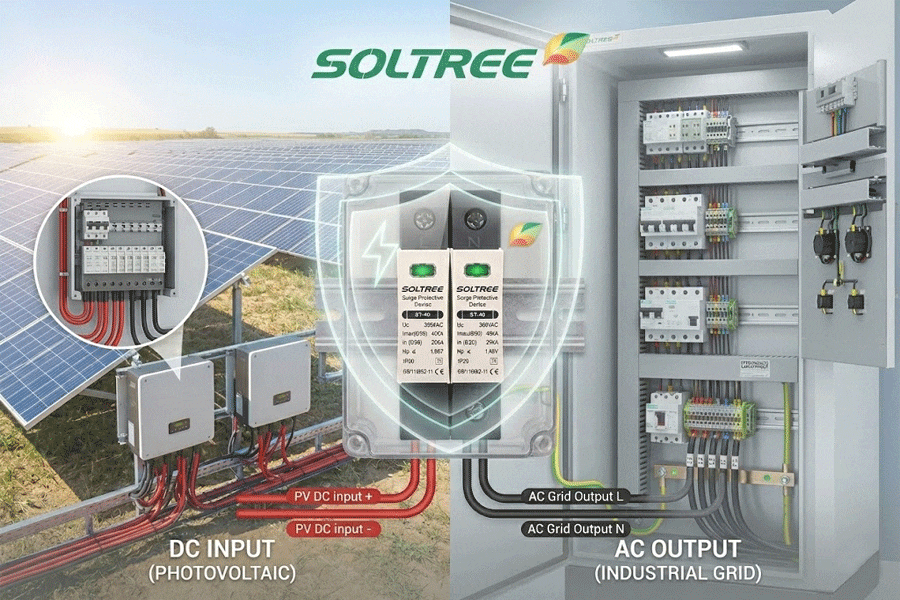
This is why specialized DC Surge Protectors—like the Type 2 DIN-rail SPD for PV systems (e.g., Uc 500VDC or 1000VDC)—are structurally enhanced. They are equipped with robust, fast-acting thermal disconnect mechanisms and significantly larger arc extinguishing chambers.
When installed inside a PV combiner box, these DC-specific components ensure that even under extreme, continuous voltage from the solar array, any internal arc is safely quenched before it can melt the housing or start a fire. Simply put: for solar applications, purpose-built DC protection is non-negotiable.
Understanding SPD Classes: Type 1 vs. Type 2 vs. Type 3
Selecting the right surge protector is all about location. The international IEC standards (and European EN standards) categorize SPDs into three main classes based on where they are installed within the electrical network and the magnitude of the surge they are designed to handle.
Here is the straightforward breakdown to ensure your facility has a proper, tiered defense system:
Type 1 SPD (Class I): The First Line of Defense
- Where to install: The main electrical switchboard or primary distribution panel (where power enters the building).
- What it does: Type 1 SPDs are heavy-duty devices built to withstand the massive, raw energy of a direct lightning strike. They are tested using a rigorous 10/350µs current waveform. If a facility is equipped with a lightning rod (external lightning protection system), a Type 1 SPD is mandatory by code.
Type 2 SPD (Class II): The Industry Workhorse
- Where to install: Sub-distribution boards, downstream control panels, and PV combiner boxes.
- What it does: This is the most widely used surge protector in the world. While Type 1 handles the brute force of a direct strike, Type 2 SPDs are designed to absorb indirect (induced) lightning strikes and internal switching surges. They are tested with an 8/20µs waveform.
- Why it matters for your project: If you are building a solar array or an industrial automation cabinet, the Type 2 DIN-rail surge protector is your go-to component. Modern high-quality Type 2 SPDs feature a modular, pluggable design. This means if the MOV inside sacrifices itself to stop a surge (indicated by the visual window turning from green to red), maintenance teams can simply pull out the cartridge and plug in a new one without shutting off the power or unscrewing the base wiring.
Type 3 SPD (Class III): Point-of-Use Protection
- Where to install: Directly next to sensitive terminal equipment (like computers, PLCs, or high-end TVs).
- What it does: Type 3 SPDs handle the tiny, residual voltage spikes that manage to slip past the Type 1 and Type 2 defenders. They have a very low discharge capacity and must always be installed downstream of a Type 2 device.
Pro Tip for Procurement: For most commercial, industrial, and solar EPC projects, bulk purchasing will center heavily around Type 2 SPDs. Ensuring your Type 2 devices are globally certified and standard 35mm DIN-rail compatible will save significant time and money during installation.
4 Key Technical Parameters Every Engineer Must Know
When you look at the front printed label of a professional surge protector, you will see several critical ratings. Sizing an SPD correctly is the difference between a fully protected system and a catastrophic failure.
Whether you are looking at an AC panel board protector or a specialized Type 2 DC SPD for a solar system, here are the four non-negotiable parameters you must understand:
1. Uc: Maximum Continuous Operating Voltage
- What it means: This is the absolute maximum voltage the SPD can handle continuously under normal operating conditions without triggering the internal MOV or degrading its lifespan.
- How to choose: The Uc rating must always be higher than the nominal voltage of your electrical system. For example, in a solar PV array where the open-circuit voltage can fluctuate significantly, choosing an SPD clearly marked with a high tolerance—such as Uc 500VDC or 1000VDC—ensures the protector won’t prematurely burn out during normal, slight grid overvoltages.
2. In: Nominal Discharge Current
- What it means: Think of In as the SPD’s “cruising speed.” It represents the peak current (using an 8/20µs waveform) that the surge protector can safely divert to the ground multiple times (usually at least 15 times) without failing.
- Why it matters: A common industry standard for a robust Type 2 SPD is an In of 20kA. This guarantees the device can repeatedly withstand the typical, everyday internal surges generated by motors and switching events without needing immediate replacement.
3. Imax: Maximum Discharge Current
- What it means: If In is the cruising speed, Imax is the “airbag deployment.” It is the absolute maximum, worst-case surge current the SPD can handle exactly once before the internal module sacrifices itself and must be replaced.
- Why it matters: For a standard 20kA nominal device, the Imax is typically 40kA. If a massive, unexpected transient spike hits the system and reaches this threshold, the SPD will absorb the hit, protect your expensive inverters or PLCs, and the visual indicator window will immediately turn red, signaling that the pluggable module has done its job and needs swapping.
4. Up: Voltage Protection Level (Residual Voltage)
- What it means: After the SPD has done its job and clamped the massive surge, Up is the small amount of “leftover” voltage that still passes through to your equipment.
- How to choose: Unlike the other parameters, lower is better. The Up value (for instance, Up < 2.8kV) must be strictly lower than the impulse withstand voltage rating of the equipment you are trying to protect. If your solar inverter can only handle a 1.5kV spike, but your SPD lets 2.8kV through, your equipment will still be destroyed.
Best Practices: Installing SPDs in Your Distribution Box
Even the highest-quality Type 2 surge protector is rendered useless—or worse, becomes a safety hazard—if it is installed incorrectly. Whether you are wiring a commercial AC panel board or a DC solar PV combiner box, following these best practices ensures your system operates safely and effectively.
1. The Golden Rule: Always Use Backup Protection (MCB)
One of the most common mistakes installers make is wiring an SPD directly to the main power lines without any upstream protection. When an SPD reaches the end of its lifespan or absorbs a catastrophic surge beyond its Imax rating, its internal components can fail in a “short-circuit” state. If there is no backup protection, this short circuit will melt the wires and start a fire.
The Solution: You must always install a dedicated [Miniature Circuit Breaker (MCB)] (link to your MCB product page) or a specialized surge backup protector in series upstream of the SPD. This ensures that if the SPD fails, the MCB will immediately trip and disconnect it from the grid, keeping the rest of the distribution box safe.
2. Building a Complete Power Quality System
It is crucial to understand that an SPD only protects against microsecond transient spikes (like lightning). It does not protect your equipment from sustained grid fluctuations, such as a continuous 240V supply jumping to 300V for several minutes.
For complete peace of mind, professional control panels should integrate a comprehensive 35mm DIN-rail ecosystem:
- [Over and Under Voltage Protectors] : Installed alongside your SPD, these devices monitor the continuous grid voltage and automatically cut the power if it drops too low or spikes too high for an extended period, automatically reconnecting when the grid stabilizes.
- [Smart Energy Meters] (link to your energy meter page): To monitor the efficiency of your protected system—especially in solar PV setups—mounting a modular DIN-rail energy meter next to your protective devices provides real-time power consumption data.
3. Keep the Grounding Wire Short and Straight
When a surge hits, the SPD must dump the massive current into the grounding system (PE terminal) as fast as possible. Electricity will always take the path of least resistance. The 0.5-Meter Rule: The total length of the connecting wires (from the live line to the SPD, and from the SPD to the ground busbar) should ideally be less than 0.5 meters. Long, coiled, or sharply bent grounding wires create high impedance, causing the surge to bypass the SPD and damage your equipment instead.
4. Leverage Pluggable Modules for Easy Maintenance
In a busy industrial or solar environment, downtime is expensive. Always source SPDs that feature a pluggable modular design. When the visual indicator window turns from green to red, your maintenance team does not need to shut down the entire system or unscrew any live wiring. They simply pull out the dead cartridge and plug a fresh one into the base, restoring full protection in seconds.
How to Source Reliable DIN-Rail SPDs from China: A Buyer’s Checklist
China is the global manufacturing hub for low-voltage electrical components. However, for procurement managers and EPC contractors, navigating the sea of suppliers can be risky. The market is flooded with incredibly cheap surge protectors that use undersized MOVs or fake certification marks, which will inevitably fail when a real surge hits your PV combiner box or control panel.
When sourcing Type 2 DIN-rail SPDs in bulk for your projects, look beyond the initial price tag. Here is your checklist for identifying a reliable manufacturing partner:
1. Verify True Certifications and Standards
Never take a “CE” sticker at face value. A legitimate DC surge protector for solar applications must explicitly comply with IEC 61643-31 (the specific standard for PV SPDs), while AC protectors should meet IEC 61643-11. Request the actual test reports. High-quality manufacturers will transparently provide documentation proving their devices pass rigorous 8/20µs and 10/350µs waveform testing.
2. Inspect the Housing Material
A surge protector handles massive amounts of energy, and heat dissipation is critical. Ask the supplier about the plastic casing. A reliable factory will only use V0-grade flame-retardant materials. If the internal MOV fails and overheats, the housing must never catch fire.
3. OEM/ODM and Supply Chain Capabilities
If you are a distributor or building custom solar combiner boxes, your supplier should offer more than just off-the-shelf products. Look for a factory that supports OEM services—such as custom logo silk-printing (like the clear, professional branding on top-tier SPDs), specific housing colors, and tailored voltage ratings (e.g., specific Uc 500VDC or 1000VDC requests). Furthermore, a direct manufacturer will offer stable lead times and competitive MOQ (Minimum Order Quantity) terms compared to trading companies.
Frequently Asked Questions (FAQs)
Q: Can I use an AC surge protector for a DC solar system? A: No. AC and DC systems manage electrical arcs differently. Because DC power has no “zero-crossing” point, an AC surge protector cannot extinguish a DC arc, posing a severe fire risk. Always use a dedicated DC SPD (like a 500VDC or 1000VDC model) for solar applications.
Q: What does the red indicator window on my SPD mean? A: High-quality Type 2 SPDs feature a visual status window. Green indicates the device is fully operational. If the window turns red, it means the internal MOV has successfully sacrificed itself to absorb a massive surge and is now depleted. You must replace the pluggable module immediately to restore protection.
Q: Do I need a circuit breaker in front of my surge protector? A: Yes. It is highly recommended to install a dedicated Miniature Circuit Breaker (MCB) or backup fuse upstream of your SPD. If the SPD fails and creates a short circuit, the MCB will trip, preventing wire damage and electrical fires.
Secure Your Electrical Systems Today
Whether you are designing a massive solar farm, upgrading commercial distribution boards, or looking for a reliable OEM manufacturing partner, choosing the right protection components is critical. Don’t leave your expensive inverters and PLCs vulnerable to unpredictable transient overvoltages.
Ready to upgrade your power quality solutions? [Contact Our Engineering Team Today] to discuss your specific technical requirements and get a competitive B2B wholesale quote.