
You bought a plug-in voltage protector to save your expensive refrigerator from unpredictable power cuts. It was a smart investment. But as you look at the device plugged into your wall, with its bright digital LED screen glowing 24 hours a day, a nagging question pops into your head:
“Is this thing running up my electricity bill? Does a voltage protector consume electricity?”
It is a very common concern, especially for homeowners trying to reduce their “vampire power” (standby power) consumption.
Here is the quick and definitive answer: Yes, it does consume electricity. But the amount is so incredibly small that you will never notice it on your power bill. In fact, unplugging it to save electricity is the worst financial mistake you could make for your appliances. Let’s break down the real numbers.
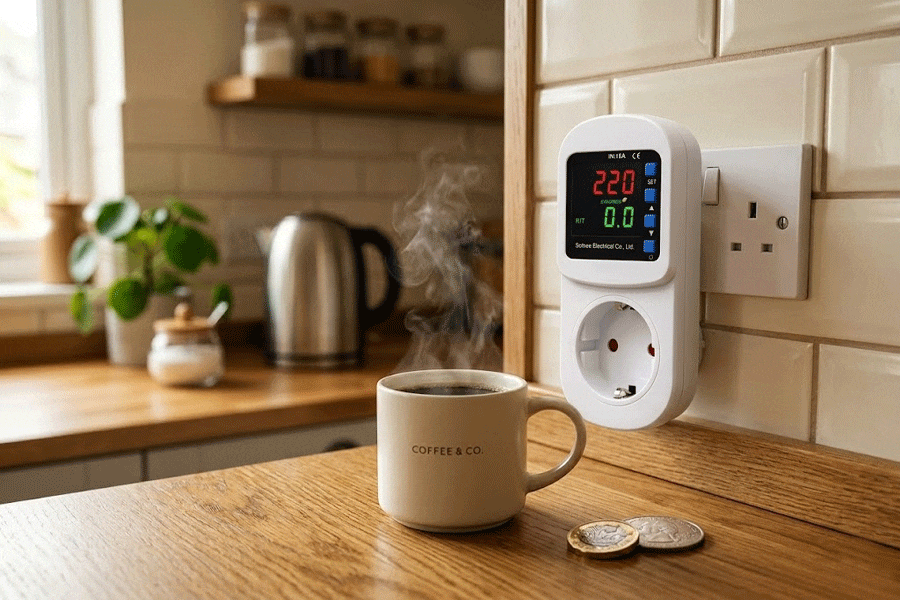
The Hard Numbers: How Much Power Are We Talking About?
A high-quality, modern digital voltage protector plug is designed to be extremely energy efficient. On average, a heavy-duty 16A protector consumes only about 1 to 2 Watts of power while in active standby mode.
Let’s do the math. If a protector uses 1 Watt continuously for 24 hours a day, 365 days a year, it will consume a total of 8.76 kWh (kilowatt-hours) annually.
Depending on your local electricity rates, that equates to a total yearly cost of $1.00 to $2.00. That is literally the cost of half a cup of coffee to protect your most valuable home appliances for an entire year.
Where Does That 1 Watt Go? (Inside Your Fridge Guard)
If the device isn’t cooling your food or spinning a fan, what is that 1 Watt actually doing? It is powering three critical components of your defense system:
- The Brain (The Microprocessor): The internal smart chip needs a tiny trickle of power to continuously sample the grid voltage millisecond by millisecond. It is always watching for dangerous spikes or brownouts.
- The Display (The LED Screen): Many people assume the bright numbers on an adjustable voltage protector are wasting power. In reality, these use high-efficiency, cold-light LEDs. They consume almost zero electricity while providing you with crucial real-time grid diagnostics.
- The Muscle (The Relay Coil): To keep the power flowing to your refrigerator, the internal 16A magnetic relay must be kept electrically “closed.” A fraction of a watt is used to maintain this secure connection.
The $2 Electricity Bill vs. the $300 Dead Compressor
When you understand the math, the idea of unplugging your fridge guard to save electricity becomes absurd.
If you unplug the protector to save $2 a year, you leave your refrigerator entirely defenseless. If a sudden power outage and immediate power surge hit your home (the dreaded “3-minute death trap”), your refrigerator’s compressor will lock up and burn out.
Replacing a burned-out refrigerator compressor costs anywhere from $200 to $400 in parts and labor. Are you willing to risk a $300 disaster just to save $2 a year?
A Note for Appliance Dealers: The Ultimate Sales Pitch
If you own an appliance store or distribute electronics, you have likely heard customers complain, “I don’t want a digital protector, the lights use too much power.” The next time a customer objects, tell them this:
“That digital screen uses less power in an entire year than your refrigerator uses in just 10 minutes. It is not wasting your electricity; it is actively guarding your wallet.”
Why You Should Never Unplug Your Voltage Protector
Unlike a phone charger or a toaster, a plug-in voltage protector is an active security guard. It is designed to be plugged in 24/7/365.
If you are looking for the ultimate balance of heavy-duty protection and energy efficiency, upgrade to our premium 16A digital voltage protector. Engineered with low-power microprocessors and a high-efficiency 16A relay, it provides bulletproof protection against power anomalies without adding a single noticeable cent to your monthly utility bill.
Leave it plugged in, let the LED screen glow, and sleep soundly knowing your appliances are safe.