
When it comes to protecting critical infrastructure, choosing the right fire suppression system is one of the most important decisions a panel builder or facility manager can make. For decades, gas-based systems have dominated the market. However, as electrical panels become more compact and maintenance budgets tighten, the industry is witnessing a massive shift.
If you are evaluating aerosol vs gas fire suppression for enclosed electrical panels, motor control centers (MCCs), or solar combiner boxes, understanding the fundamental differences is critical.
In this guide, we will compare traditional gas systems against modern condensed aerosol fire extinguishers, breaking down the true Total Cost of Ownership (TCO) and revealing why aerosol is rapidly becoming the ultimate FM200 alternative for electrical cabinets.
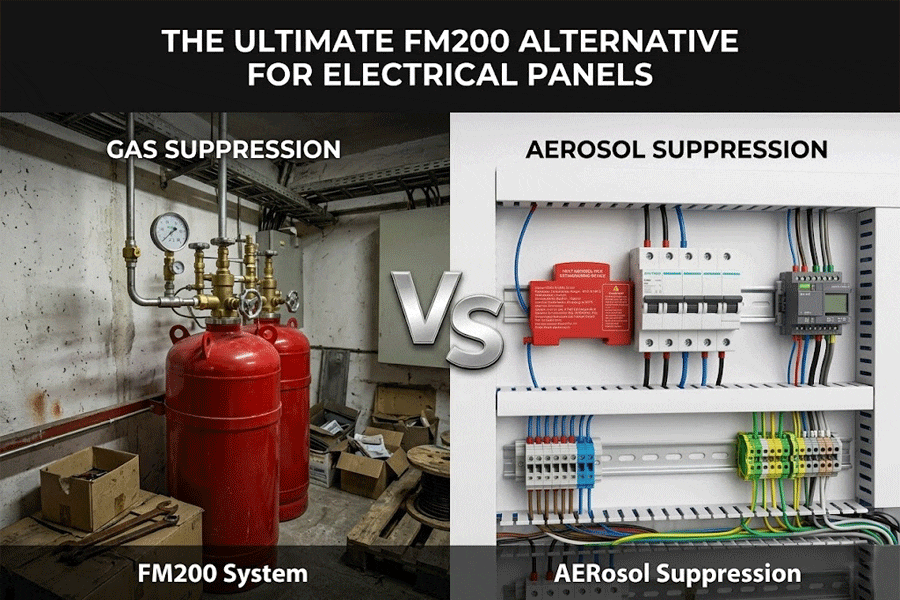
The Micro-Enclosure Challenge
Modern switchgears and electrical cabinets are masterpieces of engineering. They pack miniature circuit breakers (MCBs), automatic transfer switches (ATS), and complex PLCs into incredibly tight spaces. Space is at a premium.
When an electrical short circuit or thermal runaway occurs inside a 0.2m³ enclosure, the fire needs to be suppressed directly at the source. Trying to fit a traditional, bulky fire suppression system into these micro-enclosures often creates more problems than it solves.
The Old Standard: Gas Fire Suppression Systems
Traditional clean agent gas systems—such as FM200, CO2, or Novec 1230—are highly effective for “total flooding” applications. If you need to protect an entire server room, a centralized gas system is a logical choice.
However, when applied to micro-enclosures (like individual electrical panels), their drawbacks become glaringly obvious:
- Pressurized Cylinders: They require high-pressure tanks to store the gas.
- Complex Piping: Installing them involves drilling holes in the cabinet to run piping and nozzles.
- Space-Consuming: The bulky cylinders often have to be mounted outside the electrical panel, taking up valuable floor space.
The Modern Alternative: Condensed Aerosol Fire Extinguishers
A condensed aerosol fire suppression system takes a completely different approach. Instead of a pressurized gas tank, a micro aerosol fire extinguishing module utilizes a highly stable, solid-state chemical compound.
When the ambient temperature reaches a critical threshold (e.g., 170°C thermal activation), the solid compound instantly transforms into a rapidly expanding, nano-scale particulate smoke. This non-pressurized clean agent physically cools the environment and chemically breaks the fire’s chain reaction without displacing oxygen.
Head-to-Head Comparison for Panel Builders
Let’s break down the cost of FM200 vs aerosol and compare their performance in enclosed electrical panels.
1. Footprint & Installation Complexity
The Gas Nightmare: Retrofitting fire suppression for electrical panels with gas involves shutting down the system, drilling through the metal enclosure, running complex piping networks, and securing heavy cylinders.
The Aerosol Solution: Soltree micro fire modules offer a zero-downtime retrofit. They feature industrial 3M VHB tape and built-in DIN rail mount clips. You simply snap the space-saving fire suppression module onto a standard 35mm DIN rail right next to your breakers. Installation takes less than a minute.
The “Nightmare of Scale”: Imagine you need to protect 500 remote solar combiner boxes. Piping and installing 500 miniature gas cylinders is an absolute engineering and labor nightmare. With Soltree DIN-rail aerosol modules, a single technician can upgrade all 500 boxes in half a day.
2. System Pressure & Maintenance Costs
When calculating your budget, do not just look at the initial purchase price; look at the Total Cost of Ownership (TCO).
The high maintenance cost of FM200 and other pressurized gases is a massive hidden burden. Because they are pressurized, they are prone to leaks. They require regular weighing, pressure gauge checks, and expensive hydrostatic testing of the cylinders every few years.
Condensed aerosol systems, on the other hand, are 100% non-pressurized. There is nothing to leak. A high-quality aerosol sticker offers a 10-year maintenance-free lifespan. You install it, and you forget about it, drastically lowering your long-term TCO.
3. Environmental Compliance & The Future
Environmental regulations are tightening globally. If you are looking for a Novec 1230 phase-out alternative, aerosol is the definitive answer.
With 3M phasing out the production of Novec 1230 due to PFAS (forever chemicals) concerns, and FM200 facing strict phasedowns due to its high Global Warming Potential (GWP), the industry is scrambling for compliant solutions.
High-quality condensed aerosols (like those certified under EN 15276) are the ultimate PFAS-free fire extinguisher. They have an Ozone Depletion Potential (ODP) of 0 and a GWP of 0, ensuring your projects remain compliant with future environmental laws.
Summary Comparison Table
| Feature | Pressurized Gas (FM200 / CO2) | Soltree Condensed Aerosol |
|---|---|---|
| System State | High Pressure (Risk of leaks) | Non-Pressurized Solid State |
| Installation | Complex (Piping, drilling required) | Plug-and-Play (DIN Rail / 3M Tape) |
| Maintenance | High (Annual checks, hydrostatic testing) | Zero (10-Year Maintenance-Free) |
| Space Required | Bulky (External cylinders) | Ultra-Compact (Fits inside panels) |
| Eco-Friendly | Facing PFAS & GWP regulations | 100% PFAS-Free, ODP=0, GWP=0 |
Conclusion: Make the Right Choice for Your Switchgears
While gas suppression systems will always have a place in large room protection, they are over-engineered, too expensive, and far too complex for micro-enclosures.
For modern panel builders looking for an efficient, cost-effective, and easy-to-install FM200 alternative for electrical cabinets, the Soltree condensed aerosol module is the clear winner. By utilizing a DIN rail-mounted, thermal-triggered aerosol system, you eliminate maintenance headaches, reduce installation labor to mere seconds, and ensure your electrical infrastructure is protected by a fail-safe mechanism.
Ready to calculate the ROI for your next project? Contact the Soltree engineering team today to get a customized cost comparison and a free aerosol sizing guide for your distribution boxes.