
For decades, the electrical distribution box has been the silent, untouched workhorse of our homes and factories. It sits in a dark corner, only getting attention when something goes wrong and the power trips. But in 2026, the Internet of Things (IoT) is rewriting the rules of low-voltage distribution. Enter the WiFi circuit breaker—a revolutionary upgrade that transforms a passive safety device into an active, intelligent energy management hub.
Whether you are a homeowner looking to slash energy bills, a property manager managing multiple Airbnbs, or an electrical contractor sourcing reliable smart MCBs for industrial projects, understanding this technology is no longer optional. It is the future.
What Exactly is a WiFi Circuit Breaker?
A WiFi circuit breaker, often referred to as an IoT circuit breaker or smart MCB (Miniature Circuit Breaker), is a low-voltage electrical protection device equipped with built-in wireless communication modules.
At its core, it serves the exact same primary function as a traditional breaker: protecting your electrical circuits from damage caused by excess current. However, by connecting to your local 2.4GHz WiFi network, it allows users to remotely monitor, control, and automate electrical loads via smartphone apps (such as Tuya or eWeLink) from anywhere in the world.
How Does a Smart WiFi Circuit Breaker Work?
To understand how it works, we need to look under the flame-retardant casing.
The Core Components Inside
Unlike a standard mechanical switch, a smart WiFi breaker is packed with microelectronics:
- Current/Voltage Transformers: These continuously measure the real-time electrical flow, sending accurate power consumption data to the processor.
- Microcontroller Unit (MCU) & WiFi Module: The “brain” of the device. It processes the data, connects to your cloud ecosystem, and receives remote commands.
- Magnetic Relay & Motor Mechanism: When a fault is detected or a remote “OFF” command is received, this mechanism instantly physically disconnects the circuit.
Wiring & Setup: Does It Need a Neutral Wire?
A very common question during installation is whether a neutral wire is required. Yes, the vast majority of WiFi circuit breakers require both a live and a neutral wire (L+N) to function. This is because the internal WiFi module and MCU require a continuous, uninterrupted 220V/110V power supply to stay connected to the internet, even when the main circuit is physically switched off.
They are designed to seamlessly fit into standard distribution panels using a 35mm DIN rail mount, making retrofitting incredibly straightforward for certified electricians.
Key Features & Safety Protections
When upgrading low-voltage electrical products, safety cannot be compromised for smart features. High-quality smart breakers deliver on both fronts.
Uncompromised Electrical Safety
Before being a smart device, it is a life-saving safety switch. Reliable models come with ultra-fast short-circuit protection and overload protection, snapping the circuit open in milliseconds to prevent electrical fires. Look for products built with high-grade flame-retardant materials and certified by international standards such as CE and RoHS.
Smart Energy Monitoring & Tracking
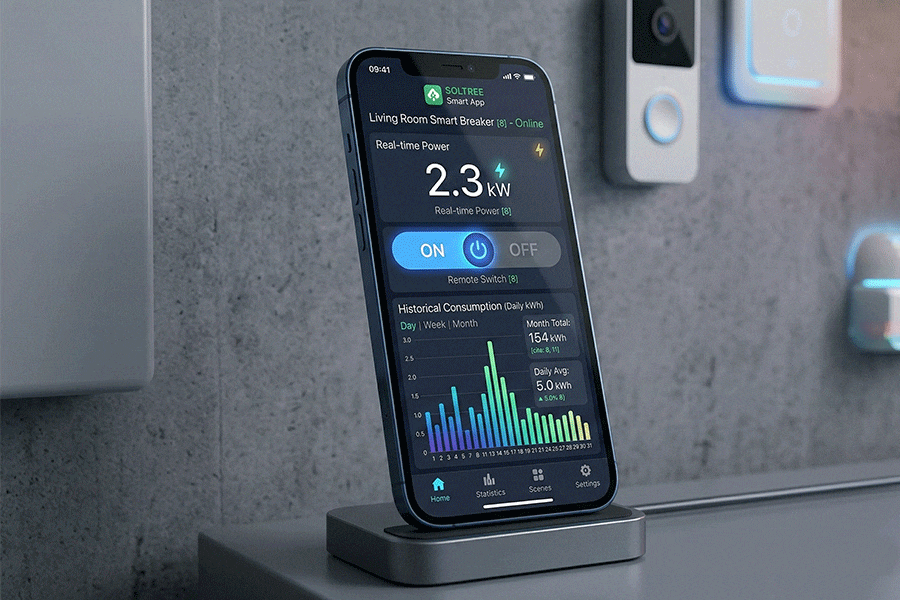
Say goodbye to energy blindness. Built-in power metering allows you to track real-time voltage, current, and total power consumption right from your phone. You can identify energy-draining appliances and track historical data to optimize your electricity bills.
Remote Control and Automation
Forget to turn off the AC before leaving for vacation? With a remote control breaker, a single tap on your app cuts the power. Furthermore, you can set timers, schedules, and loop automation, or link the breaker to voice assistants like Amazon Alexa and Google Assistant for hands-free control.
Traditional MCB vs. WiFi Smart Breaker: What’s the Difference?
| Feature | Traditional MCB | WiFi Smart Circuit Breaker |
|---|---|---|
| Primary Function | Passive safety protection | Active protection + Smart management |
| Control Method | Manual physical switch only | Smartphone App, Voice, Automation, Manual |
| Energy Monitoring | None | Real-time tracking and historical data charts |
| Fault Alerts | Silent (Requires physical inspection) | Instant App push notifications |
| Best For | Basic, budget-friendly distribution | Smart homes, commercial IoT upgrades, energy saving |
Top Applications: Where to Use a WiFi Circuit Breaker?
The versatility of these smart devices extends far beyond the residential living room.
Smart Home Automation
Integrate heavy-duty appliances like water heaters, EV chargers, and HVAC systems into your smart home ecosystem. Schedule the water heater to run only during off-peak electricity hours to save money.
Airbnb & Rental Property Management
For landlords, smart distribution boards are game-changers. Ensure all non-essential power is cut when guests check out, monitor for abnormal power usage, and resolve tripped breaker issues remotely without driving to the property.
Commercial Systems & Pneumatic Control Cabinets
In industrial settings, energy efficiency is critical. WiFi breakers are increasingly used in commercial low-voltage systems to manage high-consumption equipment. For example, integrating a smart breaker into pneumatic control cabinets allows factory managers to remotely power down heavy-duty air compressors during non-working hours, track the energy consumption of the pneumatic system, and receive immediate alerts if a motor overloads. This creates a seamlessly integrated, energy-efficient automation loop.
Sourcing Guide: How to Choose the Right WiFi Circuit Breaker
If you are an electrical contractor, system integrator, or looking to buy in bulk, selecting the right specifications and a reliable wholesale WiFi MCB supplier is crucial.
- Understand Your Specifications: Smart breakers come in various pole configurations (1P, 2P, 3P, 4P) and rated currents (typically ranging from 16A to 100A). Ensure the amperage matches your wire gauge and load requirements.
- Ecosystem Compatibility: Confirm whether the project requires Tuya, eWeLink, or open-source integration like Home Assistant.
- Wholesale & OEM Capabilities: When sourcing from China, look for a smart circuit breaker manufacturer that offers not just competitive wholesale pricing, but also robust OEM/ODM services, stable supply chains, and comprehensive technical support.
Frequently Asked Questions (FAQs)
Q1: Are WiFi circuit breakers safe to use? Yes. High-quality smart MCBs retain the mechanical trip mechanisms for short-circuit and overload protection. Even if the internal smart chip fails, the physical breaker will still trip to protect your circuit.
Q2: Can a smart circuit breaker work without the internet? Absolutely. If your WiFi goes down, the breaker continues to provide standard electrical protection. You can still manually switch it ON/OFF using the physical lever. Some models also support local LAN control without cloud access.
Q3: Can I install a smart breaker myself? While the 35mm DIN rail mounting is standard, working with main distribution panels involves lethal voltage. We strongly recommend having a certified electrician install the device to ensure proper live and neutral wire connections.
Upgrade Your Distribution Panel Today
The era of blind power consumption is over. By upgrading to a WiFi circuit breaker, you are investing in unparalleled safety, ultimate convenience, and significant long-term energy savings.
Are you an electrical contractor, distributor, or system integrator looking for premium low-voltage smart switchgear and pneumatic components for your next project? We provide high-quality, certified products with competitive wholesale pricing. Contact us now!