TLDR
Selecting switches and sockets is a technical decision, not a decorative one. Three rules prevent most field failures. High-power loads require double-pole isolation because single-pole switching leaves live conductors energized. LED lighting should always use trailing-edge dimmers to avoid flicker and driver damage. Universal sockets aren’t designed for continuous high-current loads since sustained 16A operation increases heat and contact wear.
Why the right switch and socket selection matters
Electrical switches and sockets are the control and connection points of every power system. They sit between supply and load, so selection errors surface quickly as heat buildup, nuisance trips, or premature component failure.
Modern projects mix lighting, motors, power electronics, and smart controls. Choosing by appearance or habit often leads to mismatched ratings and avoidable faults.
This guide explains what each device is designed to do, where it fails when misused, and how to select components based on real electrical behavior, not assumptions.
Electrical switch types and what each one does
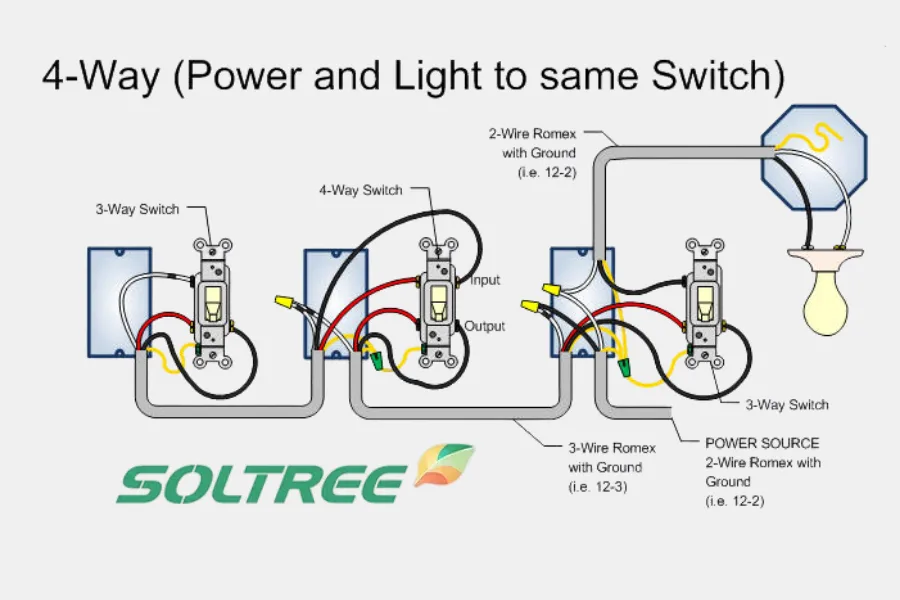
Switch types based on wiring configuration
Single-pole switches
-
Structure
Two terminals plus ground. -
Function
Controls one circuit from one location. -
Common uses
General lighting and low-power loads. -
Failure risk if misused
Using single-pole switches on high-power equipment leaves one live conductor energized, increasing shock risk during maintenance.
Double-pole switches
-
Structure
Four terminals plus ground. -
Function
Disconnects both live conductors simultaneously. -
Common uses
Water heaters, air conditioners, 240V appliances. -
Why it matters
Required for full electrical isolation. Reduces fault exposure and improves service safety.
Three-way switches
-
Structure
One common terminal and two traveler terminals. -
Function
Controls one load from two locations. -
Common uses
Staircases, corridors, multi-entry rooms. -
Installation note
Incorrect traveler wiring is a common cause of nonfunctional circuits.
Four-way switches
-
Structure
Four traveler terminals. -
Function
Extends control to three or more locations. -
Common uses
Commercial corridors, warehouses, large open spaces. -
Installation note
Must be paired correctly with two three-way switches.
Switch types based on function and use case
Dimmer switches
-
Purpose
Adjust light output and reduce energy use. -
Technology
-
Leading-edge for resistive loads.
-
Trailing-edge for LED drivers.
-
-
Failure risk if misused
Using leading-edge dimmers on LED loads causes flicker, audible noise, and early driver degradation.
Smart switches
-
Purpose
Remote control and automation. -
Typical features
-
Scheduling
-
Energy monitoring
-
Remote access
-
-
Installation note
Many models require a neutral conductor. Missing neutrals are a common retrofit issue.
Occupancy sensor switches
-
Purpose
Automatic lighting control based on motion. -
Energy behavior
Integrated daylight sensing prevents unnecessary activation. -
Failure risk if misapplied
Poor sensor placement can cause nuisance switching in high-traffic zones.
Bell push switches
-
Purpose
Momentary contact control. -
Common uses
Doorbells, call systems, test circuits.
Do-not-disturb switches
-
Purpose
Control room status indicators. -
Common uses
Hotels, hospitals, meeting rooms.
Timer and delay switches
-
Timer switches
Operate loads at preset times. -
Delay switches
Shut off automatically after activation. -
Best fit
Stairwells, security lighting, outdoor circuits.
Combination switch and socket units
-
Purpose
Space-saving installations. -
Risk note
Socket current rating must match connected load. Underrated units overheat under sustained demand.
Touch panel switches
-
Purpose
Silent, button-free control. -
Best fit
Modern residential and commercial interiors.
Electrical socket types and where they’re used
Sockets based on pin design
Two-pin sockets
-
Structure
No grounding conductor. -
Use case
Double-insulated, low-power devices. -
Limitation
No fault path for leakage current.
Three-pin sockets
-
Structure
Live, neutral, and ground. -
Typical ratings
6A to 16A at 250V depending on region. -
Why it matters
Grounding limits shock risk during insulation failure.
Five-pin sockets
-
Purpose
Accepts multiple plug types. -
Benefit
Installation flexibility across device classes.
Sockets based on load and function
International or universal sockets
-
Design
Multi-standard pin acceptance. -
Best fit
Hotels, airports, international offices. -
Failure risk under load
Sustained 16A loads increase contact resistance, leading to heat buildup and long-term connector damage.
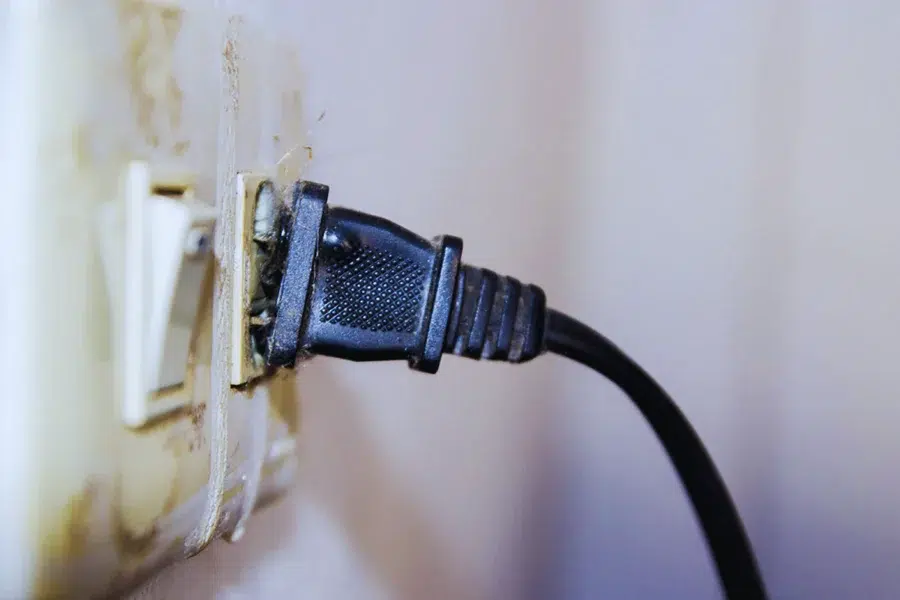
Power sockets
-
Current ratings
Commonly 16A or 25A. -
Use case
Air conditioners, ovens, industrial equipment. -
Key requirement
Secure termination and heat-resistant materials.
USB sockets
-
Outputs
Typically 5V at 2.4A or higher. -
Use case
Device charging without adapters. -
Failure risk if overloaded
Continuous full-load charging increases internal temperature, shortening module lifespan.
Electrical control and communication modules
Control modules for lighting and fans
Fan regulators
-
Types
-
Resistive
-
Electronic
-
Remote-controlled
-
-
Typical control steps
Four or five speed levels. -
Efficiency note
Electronic regulators reduce heat losses compared to resistive designs.
Dimmer modules
-
Purpose
Embedded lighting control. -
Use case
Smart and modular systems.
Communication and data modules
Data sockets
-
Standards
Cat5e, Cat6, Cat7. -
Function
High-speed Ethernet connectivity.
Telephone sockets
-
Connector
RJ11. -
Current relevance
Declining but still used in legacy installations.
TV sockets
-
Function
Antenna or satellite signal transmission.
USB modules
-
Use case
Conference tables and shared charging stations.
Multi-gang switch banks and centralized control
What a switch bank does
A switch bank groups multiple switches into a single panel to manage several circuits from one location.
Key benefits
-
Reduced wall clutter
-
Centralized operation
-
Cleaner wiring layout
Common configurations
-
2-gang
Basic lighting control. -
3-gang
Medium-sized rooms and offices. -
4-gang and above
Commercial and industrial panels.
Typical applications
-
Residential living areas
-
Commercial offices and hotels
-
Equipment control panels
How to choose switches and sockets for real-world use
Match the device to the environment
-
Residential
Safety, usability, smart features. -
Commercial
Durability and centralized control. -
Industrial
High current ratings, IP protection, rugged housings. -
Outdoor
Weather and UV resistance.
Check voltage, current, and certification first
-
Voltage
Match local standards such as 120V or 230V. -
Current
Select ratings based on continuous load, not peak demand. -
Certification
Look for CE, UL, or equivalent approvals.
Select features based on how the circuit is used
-
Double-pole switching for high-power loads.
-
Trailing-edge dimmers for LED lighting.
-
Sensor and smart switches where automation reduces waste.
-
Data and USB modules where connectivity is required.
Installation and maintenance considerations
-
Use licensed electricians for complex wiring.
-
Inspect sockets regularly for heat discoloration.
-
Upgrade wiring when expanding load capacity.
In practice, engineering teams often standardize on certified low-voltage platforms from suppliers such as Soltree when projects require consistent performance across residential, commercial, and light industrial applications.
FAQ
What’s the difference between single-pole and double-pole switches
A single-pole switch interrupts one conductor and is suitable for standard lighting circuits. A double-pole switch disconnects both live conductors at the same time. This full isolation is required for high-power or 240V equipment, where leaving one conductor energized increases shock and maintenance risk.
Can dimmer switches be used with LED lights
Yes, but only if the dimmer is designed for LED loads. Trailing-edge LED-compatible dimmers handle low wattage and electronic drivers correctly. Using leading-edge dimmers with LEDs often causes flicker, audible noise, reduced dimming range, and premature failure of the LED driver.
How do smart switches work
Smart switches connect to a network using Wi-Fi or protocols such as Zigbee. They allow remote control, scheduling, and automation through apps or voice assistants. Many models also support energy monitoring. Most smart switches require a neutral wire, which should be verified before installation.
Do international sockets work everywhere
International sockets accept multiple plug types, but they don’t automatically solve electrical compatibility. Voltage and current ratings must still match the connected device and local supply. Using international sockets for continuous high-current loads can increase contact resistance and lead to overheating over time.
Are switch banks suitable for homes
Yes. Switch banks are useful in homes where multiple lights or devices need centralized control, such as living rooms or kitchens. They reduce wall clutter and simplify operation. The key requirement is ensuring each switch within the bank is correctly rated for its specific circuit load.
Do I need a 15 amp or 20 amp light switch
The switch rating must match or exceed the circuit current. Most residential lighting circuits use 15A switches, but 20A switches are required on 20A circuits or where continuous loads are higher. Underrated switches can overheat even if the connected light appears low power.
What does L1, L2, L3, and L4 mean on a light switch
These markings indicate line and traveler terminals, mainly on multi-way switches. L1 is typically the common terminal, while L2, L3, and L4 are traveler connections. Correct identification is critical. Miswiring these terminals often results in nonfunctional or unpredictable switch behavior.
For projects that demand certified components, predictable electrical behavior, and factory-direct supply, selection frameworks like this are often applied when evaluating manufacturers such as Soltree.