TLDR
This guide explains electric wires and cables by voltage, insulation, structure, and application. It adds clear decision logic and numeric thresholds so you can choose correctly, avoid common failures, and stay compliant in real installations.
Wire vs Cable – What Actually Changes in Real Installations
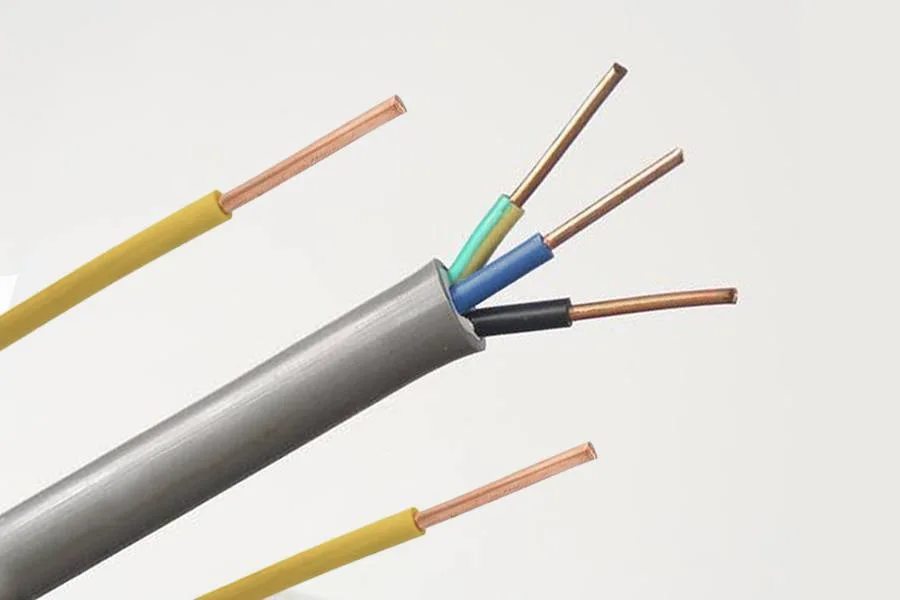
Wire
What it is One electrical conductor
Form Solid or stranded
Insulation Optional
Best for Short, fixed, low-risk internal connections
Cable
What it is Two or more insulated conductors under one sheath
Form Conductors plus jacket, sometimes shielding or armor
Best for Building wiring, equipment feeds, control and automation
Rule of thumb
Single function, short run → wire
Long run, protection needed, mixed power and control → cable
What’s Inside a Cable and Why Each Layer Matters
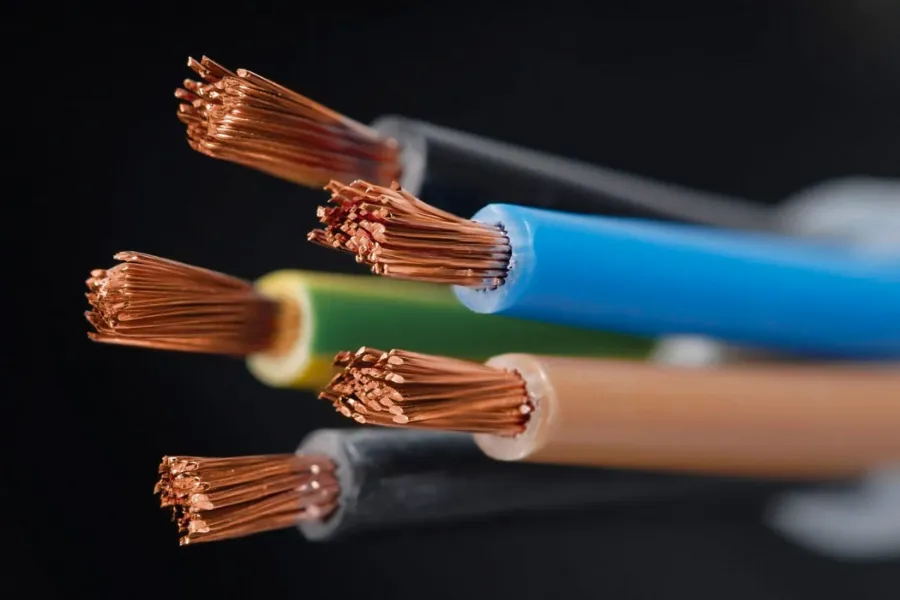
Conductor
Copper High conductivity and stable terminations
Aluminum About 60% of copper conductivity, lighter and lower cost, requires larger size
Form
Solid for permanent installs
Stranded for vibration or movement
Insulation
PVC General-purpose with lower temperature rating
XLPE Higher ampacity and better heat and chemical resistance
Rubber Extreme flexibility for cold or mobile use
Silicone Operates from -60°C to 200°C
Mineral insulation Fire-survivable with zero smoke
Shielding
Limits EMI and noise coupling
Required for instrumentation, VFD motor leads, and control signals
Armor
Protects against impact, compression, and rodents
Common for burial and industrial areas
Outer Jacket
Defends against UV, moisture, chemicals, and abrasion
Voltage Classes and Where Each One Is Used
| Voltage class | Range | Typical use |
|---|---|---|
| Low voltage | ≤1000 V | Homes, buildings, machinery |
| Medium voltage | 1–36 kV | Feeders, substations, large facilities |
| High voltage | >36 kV | Long-distance transmission |
Insulation Types and the Environments They’re Built For
Thermoplastic – THHN, THWN, PVC
Indoor branch circuits and conduit runs
XLPE – XHHW, MV XLPE
Outdoor, industrial, and medium-voltage systems
Rubber – W, DLO
Welders, cranes, and mobile equipment
Mineral-Insulated
Emergency circuits, tunnels, and fire zones
LSZH
Public buildings, data centers, and transit areas
Silicone
Ovens, furnaces, and extreme hot or cold locations
Common Cable Constructions and Where They Fail or Succeed
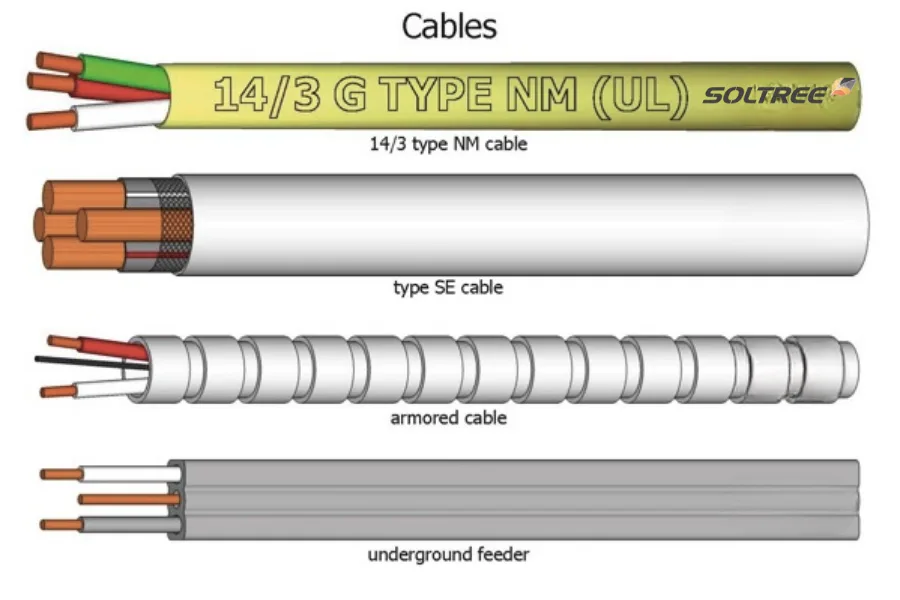
NM Cable
Dry residential walls only
Fails in damp or exposed locations
Armored Cables – AC, MC, SWA
AC for commercial interiors
MC for industrial and higher protection
SWA for burial and harsh environments
Control and Instrumentation Cables
Multi-core, shielded, and noise-resistant
Used for PLCs, sensors, and automation
Data Communication Cables
This section is included for routing and interference context, not power delivery selection
Coax for RF and legacy broadband
Twisted pair for Ethernet and telecom
Fiber for high-speed, EMI-immune links
Specialty Cables
PV cable UV-resistant and 90–105°C+, DC rated
Submersible Watertight and pressure-resistant
Welding High current and ultra-flexible
Flat cable Surface routing and retrofit work
How to Choose the Right Cable Without Guesswork
A fast decision table
| Installation environment | Voltage | Movement | Fire requirement | Recommended cable family |
|---|---|---|---|---|
| Dry interior wall | ≤600 V | No | Standard | NM or THHN in conduit |
| Industrial floor | ≤1000 V | No | Low smoke | MC or XLPE |
| Outdoor exposed | ≤1000 V | No | UV resistant | XHHW or XLPE |
| Mobile equipment | ≤600 V | Yes | Standard | Rubber insulated |
| Public building | ≤1000 V | No | Fire safety | LSZH or MI |
| Solar array | DC ≤1500 V | No | UV and heat | PV cable |
Practical Numeric Thresholds Engineers Actually Use
Voltage drop
Keep branch circuits under 3%
Keep combined feeder plus branch under 5%
Temperature derating
For many 90°C XLPE cables, expect 10–15% ampacity reduction for every 10°C above 30°C ambient
Long extension cords
Beyond 30 m, stepping up one wire gauge is often required to control voltage drop under load
These ranges reflect common NEC and IEC field practice.
FAQ
Which cable should be used for in-wall residential wiring?
For dry interior walls, NM-B cable is standard and code-compliant. In basements, garages, or commercial spaces, THHN in conduit or MC cable is often required. Moisture exposure, mechanical protection, and local electrical codes ultimately determine the correct wiring method.
What should I look for when choosing extension cords for a workshop?
Start with ampacity, not length. Most power tools require at least 14 AWG or 2.0 mm² conductors. For runs longer than 30 m, step up one wire gauge to limit voltage drop. Rubber-jacketed heavy-duty cords offer better durability.
Why shouldn’t power cables and data cables run together?
AC power cables generate electromagnetic fields that interfere with low-voltage data signals. Parallel routing can cause data loss and unstable communication. Maintain 20–30 cm separation, cross at 90 degrees when necessary, or use shielded data cables in high-noise environments.
Can standard outdoor cable be used for solar panel connections?
No. Solar PV systems operate at high DC voltage and elevated temperatures. Only dedicated PV cable rated for UV exposure and 90–105°C continuous operation should be used. Standard outdoor cable degrades quickly and creates long-term safety and reliability risks.
What does ampacity actually depend on?
Ampacity depends on conductor size and material, insulation temperature rating, ambient temperature, and installation method. Cable bundling, conduit fill, and poor heat dissipation reduce allowable current. Ignoring these factors leads to overheating and premature insulation failure.
How Cable Decisions Are Made in Real Projects
In practice, factory-direct manufacturers validate cable limits under sustained load and enclosure heat, not just free-air ratings. This approach is common in ISO-certified low-voltage equipment supplied by companies like Soltree, where thermal margins and installation reality matter more than catalog numbers.
What to Remember Before You Specify or Install a Cable
Cables are engineered safety components, not interchangeable commodities. Correct selection depends on voltage class, environment, heat and load behavior, and mechanical or fire risk. The same decision logic is applied across industrial, commercial, and residential systems built around certified low-voltage products from manufacturers such as Soltree. Choose deliberately. Cable mistakes are expensive to fix later.